Pokemon Type Chart: Strengths, Weaknesses, and Effectiveness
This Pokemon type chart shows which attacking types are super effective, resisted, or completely ineffective against each defending type. It covers the standard modern main-series chart for all 18 types, then explains how to calculate dual-type matchups without mixing up a Pokemon reference chart with a personal favorite-type chart.
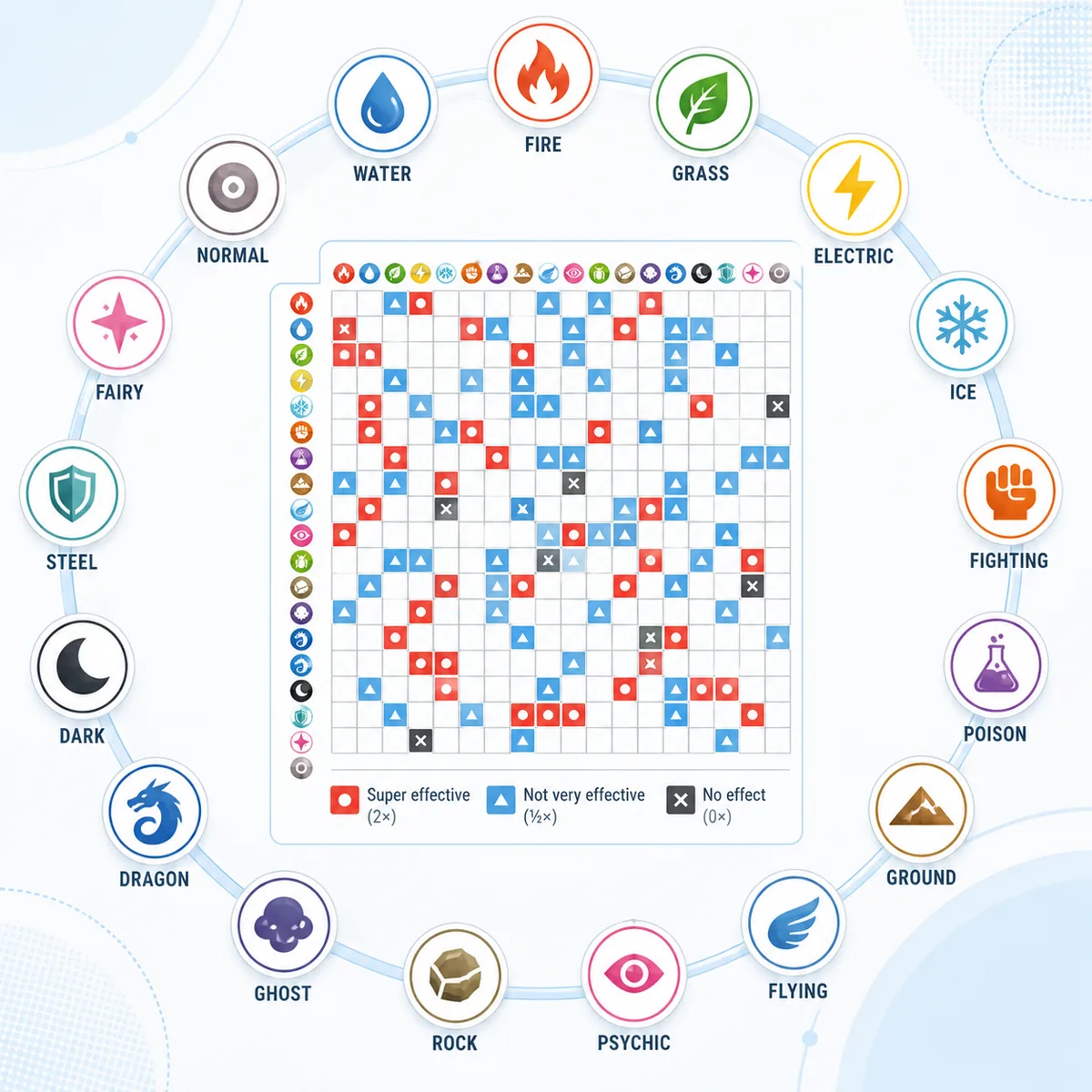
Pokemon Type Chart by Attacking Type
The table groups every defending type that receives a special result from each attack type. Types not listed in a row are neutral at 1×. This format keeps all 18 types readable on a phone while still giving you the same practical lookup as a wide matrix: start with the move's attacking type, then check the defending type in the appropriate column.
| Attacking type | Super effective · 2× | Not very effective · ½× | No effect · 0× |
|---|---|---|---|
| Normal | None | Rock, Steel | Ghost |
| Fire | Grass, Ice, Bug, Steel | Fire, Water, Rock, Dragon | None |
| Water | Fire, Ground, Rock | Water, Grass, Dragon | None |
| Electric | Water, | Electric, Grass, Dragon | Ground |
| Grass | Water, Ground, Rock | Fire, Grass, Poison, , Bug, Dragon, Steel | None |
| Ice | Grass, Ground, , Dragon | Fire, Water, Ice, Steel | None |
| Fighting | Normal, Ice, Rock, Dark, Steel | Poison, , Psychic, Bug, Fairy | Ghost |
| Poison | Grass, Fairy | Poison, Ground, Rock, Ghost | Steel |
| Ground | Fire, Electric, Poison, Rock, Steel | Grass, Bug | |
| Grass, Fighting, Bug | Electric, Rock, Steel | None | |
| Psychic | Fighting, Poison | Psychic, Steel | Dark |
| Bug | Grass, Psychic, Dark | Fire, Fighting, Poison, , Ghost, Steel, Fairy | None |
| Rock | Fire, Ice, , Bug | Fighting, Ground, Steel | None |
| Ghost | Psychic, Ghost | Dark | Normal |
| Dragon | Dragon | Steel | Fairy |
| Dark | Psychic, Ghost | Fighting, Dark, Fairy | None |
| Steel | Ice, Rock, Fairy | Fire, Water, Electric, Steel | None |
| Fairy | Fighting, Dragon, Dark | Fire, Poison, Steel | None |
How to use the rows: choose the move's type on the left, then look for the defending type in one of the three result columns. A type that is not listed is neutral at 1×. The same rules apply when you are checking a single type before you move to a dual-type calculation.
Fast decision rule: use the static table for one matchup, then open the Pokemon Coverage Calculator when you want to compare several attacking types at once. Use the Pokemon Weakness Calculator when the question is defensive and starts with a specific Pokemon or team.
How to Read 2×, ½×, 0×, and 1×
The most useful shortcut is to treat the type chart as a multiplier lookup, not as a ranking of which Pokemon is “strongest.” The attacking move supplies the row, the defending Pokemon supplies the target type, and the result tells you how the move's type interacts with that target. Base power, the user's Attack or Special Attack, the defender's defenses, Same-Type Attack Bonus, abilities, items, and other battle conditions are separate parts of damage calculation.
The attack type is favored against the defending type. Fire against Grass, Water against Fire, and Fairy against Dragon are familiar examples.
The defending type resists the attack. Fire against Water or Steel against Fire reduces the type multiplier before other modifiers.
The defending type is immune to that attack type. Normal blocks Ghost, Ground blocks Electric, and Fairy blocks Dragon in the standard chart.
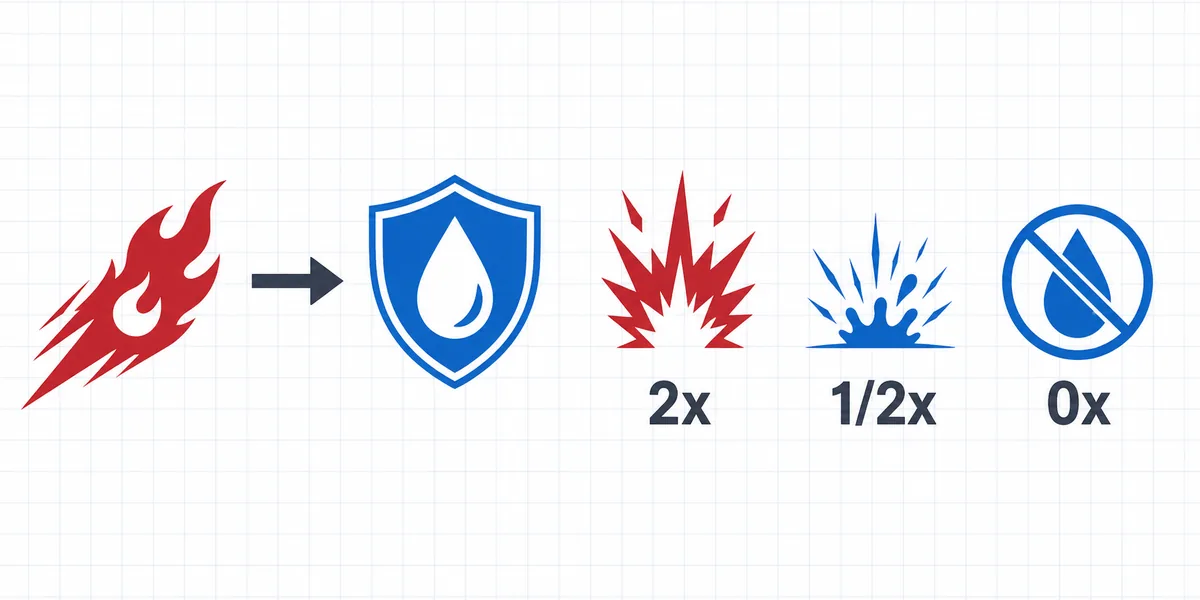
Neutral 1× matchups are the unlisted cases
Most cells in a full 18-by-18 matrix are neutral. The summary table intentionally lists only the exceptions so it is easier to scan. If you are checking a move type against a target and the target does not appear in the super-effective, resisted, or immune column, start with 1×. That does not mean the move is weak overall; it means the type chart is not changing its base relationship.
How Dual-Type Calculations Work
A dual-type Pokemon has two defending types, so you apply the same attacking type to both and multiply the results. This is the reason a dual type can have a 4× weakness, a ¼× resistance, or a complete immunity even when one of its types would normally take damage. The type chart does not average the two types and does not choose only the “stronger” matchup.
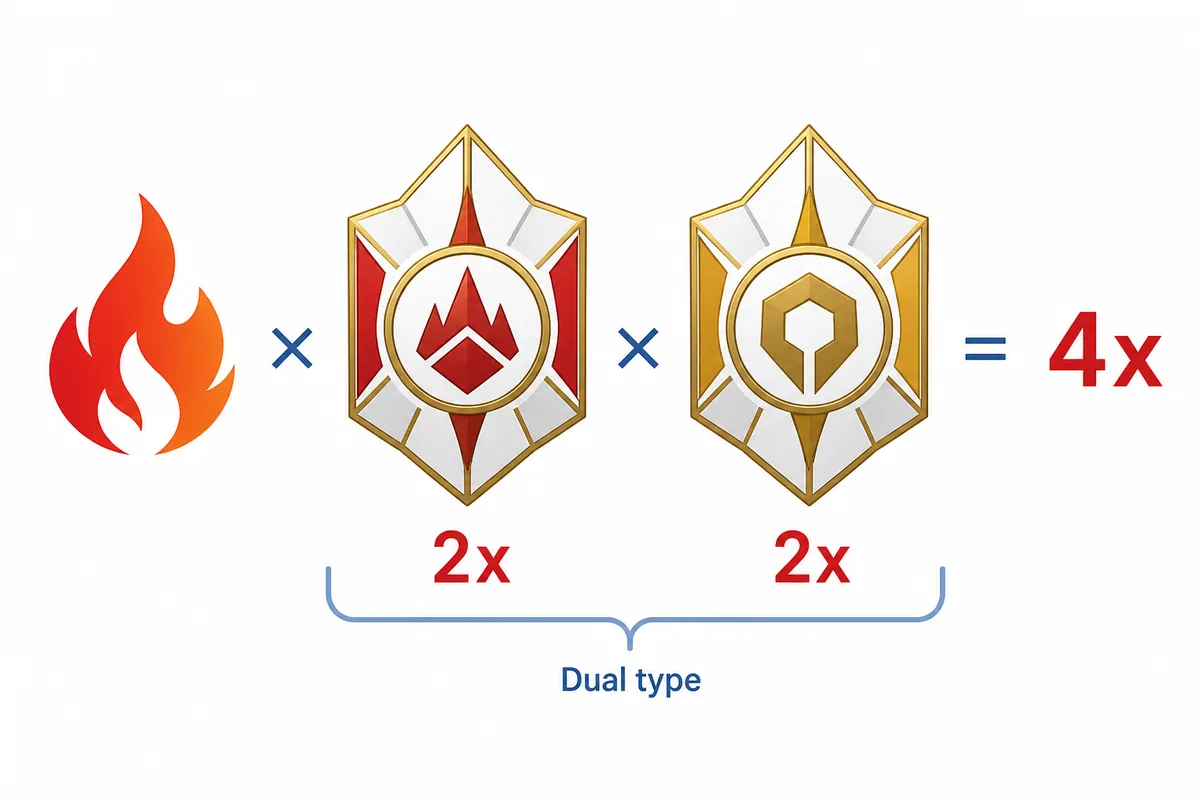
Fire against a Grass/Steel defender is super effective against both types, so the combined type multiplier is 4×.
When an attack is resisted by both defending types, the result becomes a quarter of the normal type multiplier.
An immunity overrides the other type interaction. Ground against a Flying/Steel defender remains 0× because Flying is immune to Ground.
For a real team-building decision, a static chart is only the first step. Open the Pokemon Weakness Calculator when you need to combine a specific species' two types, inspect a whole six-Pokemon team, or compare resistances and immunities. For the separate offensive question of which move types cover the most targets, use the Pokemon Coverage Calculator.
Common Matchup Examples
These examples show how to use the chart without memorizing every row. Start with the attacking type, find the defending type in the table, and then check whether the target has a second type that changes the result.
| Question | Chart lookup | Result |
|---|---|---|
| Is Water good against Fire? | Water → Fire | 2×, super effective |
| Is Electric good against Ground? | Electric → Ground | 0×, no effect |
| Is Fairy good against Dragon? | Fairy → Dragon | 2×, super effective |
| Why does Fire sometimes hit for 4×? | Fire → Grass/Steel | 2× × 2× = 4× |
| Why can Ground fail against a dual type? | Ground → Flying/Steel | 0× × 2× = 0× |
Use the chart to answer the type question first, then use a calculator or in-game summary to check the Pokemon's full context. This distinction is especially helpful when a target has an ability that changes an interaction, a move with an unusual effect, or a battle format with non-standard rules.
Chart Limits and Game Differences
This page uses the standard modern main-series type-effectiveness relationships for the 18 current types. It is a reference for the type matchup itself, not a guarantee of final damage in every battle. Abilities such as Levitate, items, weather, move-specific effects, critical hits, Same-Type Attack Bonus, and temporary battle mechanics can change the final result after the basic type multiplier is applied.
Do not automatically reuse this table for Pokemon GO, card-game rules, anime-only battles, or another spin-off. Similar-looking names can hide different damage formulas and different type multipliers. If your search is specifically about Pokemon GO, add that product name to the query and use a source that documents the GO rules. For the main-series chart, this guide's 18-type boundary is the safer default.
The chart also does not replace a Pokemon's own data. Regional forms, alternate forms, Terastallization, and abilities can change the type or the way a matchup is handled. When you need a specific answer for a team, use the site's weakness calculator; when you want a personality-style type result, use the Pokemon Type Quiz instead.
Pokemon Type Chart FAQ
How many Pokemon types are there?
The standard modern main-series chart has 18 types: Normal, Fire, Water, Electric, Grass, Ice, Fighting, Poison, Ground, Flying, Psychic, Bug, Rock, Ghost, Dragon, Dark, Steel, and Fairy.
What does super effective mean?
Super effective means the type multiplier is 2× before other battle modifiers. If the defender has two types that are both weak to the attack, the interaction can become 4×.
How do dual types work?
Apply the attack type to each defending type and multiply the results. Two 2× results become 4×, two ½× results become ¼×, and any 0× immunity makes the combined result 0×.
Is the Pokemon GO type chart the same?
No. Pokemon GO and other spin-offs can use different matchup values and formulas. This page is for the standard modern main-series reference chart, so keep the game name in your search when you need a different ruleset.
When should I use the Pokemon Weakness Calculator?
Use this page for a quick chart lookup. Use the Pokemon Weakness Calculator when you want to check one species, a custom dual type, a full team, resistances, immunities, or move-type coverage.
What is the difference between a type chart and a type calculator?
A type chart is a static reference that lets you look up every relationship. A calculator applies those relationships to a specific Pokemon, team, or group of attacking types so you can get a tailored answer instead of scanning the entire matrix.
Summary
The Pokemon type chart is easiest to use when you separate the three key results: 2× super effective, ½× resisted, and 0× immune. Unlisted matchups are neutral at 1×, and dual types multiply their two defending interactions. Use the static table for a fast reference, then move to the weakness calculator for a specific Pokemon or team.
Sources and verification
- Official Pokémon Pokédex — first-party type and species context for checking current Pokemon data.
- Bulbapedia type reference — community cross-check for type names, relationships, immunities, and historical differences.
- Pokémon Database type chart — community cross-check for the standard modern main-series matchup matrix.